
Learn how a PPM accuracy calculator works, why accurate ppm measurements are essential in chemistry and water testing, and how to ensure precision with tools from PPMCalculator.com.
What Does PPM Accuracy Mean?
PPM (parts per million) is one of the most precise ways to express concentration — often used in water testing, hydroponics, chemical dosing, and environmental monitoring.
However, even a small measurement error can shift results by hundreds of ppm when scaled up. That’s why accuracy matters.
A PPM accuracy calculator helps you verify whether your readings — from meters, manual calculations, or lab results — are within acceptable tolerance ranges. It’s the tool that tells you how close your measured value is to the true concentration.
Why PPM Accuracy Is Critical
Precision matters in every ppm-based process.
|
|
|
|
|
|
|
|
|
|
|
|
|
|
|
|
|
|
|
|
If you’re handling disinfection, nutrients, or trace chemicals, you can’t rely on “close enough.” Accurate ppm readings protect both processes and people.
How a PPM Accuracy Calculator Works
A ppm accuracy calculator compares your measured value to a known or theoretical true value and expresses the difference as an accuracy percentage.
The formula is simple:

Example:
If your target concentration is 500 ppm but your meter shows 480 ppm:
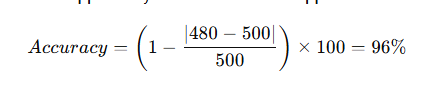
That means your result is 96% accurate, which is acceptable for most water or nutrient systems.
You can check your results instantly using the PPM Accuracy Calculator.
Factors That Affect PPM Accuracy
Several real-world factors can influence your ppm readings:
- Meter Calibration
- Always calibrate your TDS or EC meter using standard solutions before testing.
- You can cross-check EC readings with the EC to PPM Calculator.
- Always calibrate your TDS or EC meter using standard solutions before testing.
- Temperature Variations
- Conductivity changes with temperature. Make sure your meter compensates automatically (ATC).
- Conductivity changes with temperature. Make sure your meter compensates automatically (ATC).
- Contamination
- Residue on probes or glassware can alter results. Clean equipment before testing.
- Residue on probes or glassware can alter results. Clean equipment before testing.
- Human Error
- Incorrect sample volume or unit conversions (ppm, mg/L, %) cause deviations.
- Use the PPM Solution Calculator to verify concentrations accurately.
- Incorrect sample volume or unit conversions (ppm, mg/L, %) cause deviations.
- Chemical Composition
- Different ions (NaCl, KCl, etc.) conduct electricity differently, changing the conversion factor.
- Different ions (NaCl, KCl, etc.) conduct electricity differently, changing the conversion factor.
Understanding and controlling these factors ensures consistent, accurate ppm data every time.
Common Accuracy Ranges
|
|
|
|
|
|
|
|
|
|
|
|
|
|
|
|
|
|
|
|
If your readings fall outside these ranges, recheck calibration, sample cleanliness, and formula accuracy.
How to Improve PPM Accuracy
- Calibrate Weekly
Use calibration solutions close to your working range (e.g., 1000 µS/cm for hydroponics).
- Use Consistent Units
Always stick to one system — ppm, mg/L, or % — to prevent conversion errors.
For cross-checking, the PPM to Percent Calculator helps ensure your math stays consistent.
- Avoid Air Bubbles and Residue
When measuring liquid samples, avoid bubbles clinging to the probe — they disrupt conductivity.
- Recalculate Manually
If a reading looks off, verify it manually using the formula or check with the Chemical Dosing PPM Calculator.
- Compare to a Standard
Test your meter against a known reference solution once a month.
Example: Checking Meter Accuracy
Let’s say your meter reads 980 ppm, but the certified test solution is 1000 ppm.
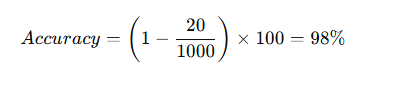
Your device is within tolerance — accurate enough for most applications.
If you consistently see lower readings, you may need recalibration or probe replacement.
Key Takeaways:
- PPM accuracy measures how close your result is to the true concentration.
- Even small ppm errors can impact water quality, chemical dosing, or nutrient balance.
- Accuracy is affected by calibration, temperature, and measurement consistency.
- Use trusted tools to maintain reliability:
Maintaining ppm accuracy isn’t just a technical detail — it’s the foundation of safe water systems, efficient dosing, and consistent quality control.
With the tools from PPMCalculator.com, you can measure with confidence, knowing your numbers are both precise and trusted.