
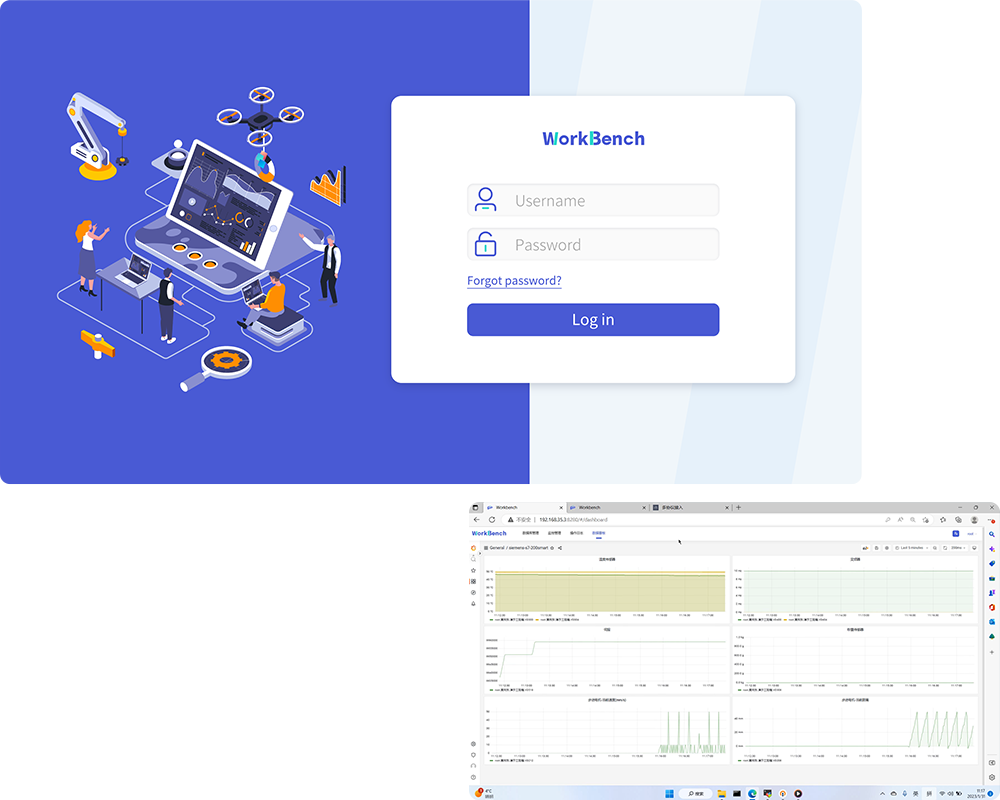
In today s earthly concern, data is generated at an unexampled rate, especially in industries like IoT, finance, health care, and vitality. As a lead, organizations need to select the right tools to manage and hive away this data expeditiously. One such tool gaining popularity is the time series (TSDB). But time series database, and why should it be a consideration for your data storehouse needs? A time serial publication database is a specialised type of designed to wield time-stamped data. It excels in managing large volumes of time-ordered data, which can be anything from sensing element readings to stock prices. Unlike traditional relational databases, a TSDB is optimized for storing and querying data that is indexed by time, qualification it nonsuch for real-time analytics and long-term trends psychoanalysis.
Understanding when to use a time serial database can help organizations streamline their data management processes and improve work efficiency. Time series databases are particularly useful when you have data that is incessantly generated over time and needs to be half-tracked in a time-dependent manner. This type of data often exhibits certain patterns or trends that can be more well analyzed when stored in a time-optimized database. For illustrate, if you’re workings with sensing element data, monitoring systems, or any use case involving high-frequency data solicitation, a TSDB is apotheosis because it can handle the fast inflow of data and make querying effective. Regular relational databases would fight to finagle such data, leading to slower performance and higher imagination consumption.
tsdb monitoring platform becomes superficial when we look at its benefits. Traditional databases may not be efficient for time-based data due to the way they salt away and indicator entropy. In a TSDB, the time-series data is stored in a way that allows for faster aggregation and retrieval, especially when it comes to querying over specific time intervals. This is necessary for any practical application where you need to psychoanalyze trends, patterns, or perform prognostic analytics on time-sensitive data. Additionally, TSDBs often come with shapely-in functionalities for handling vauntingly data sets and ensuring data unity over outspread periods. They are also weaponed with high accessibility, scalability, and performance optimizations, qualification them a preferred pick for real-time applications.
Choosing a time serial publication is not always straightforward. While it’s tsdb benchmark in particular industries or scenarios, the decision to take in one requires an understanding of your data s nature. If your data is static, sporadic, or not tied to time, then a TSDB may not be necessary. But for applications that require monitoring and analyzing data points over time, such as performance prosody, sensor outputs, or any time-sensitive work, a time serial becomes a crucial plus. It allows organizations to make better, data-driven decisions by find insights that would be noncompliant or unacceptable to extract from traditional databases.
In conclusion, understanding what a TSDB is and recognizing when to use a time serial database is necessary for managing time-dependent data effectively. With its specialised capabilities, a TSDB can supply the performance, scalability, and logical world power needful to work with high-velocity data. By choosing the right database, organizations can see to it they are well-equipped to wield the challenges posed by real-time data streams and unlock the full potentiality of their data.